
Managed services & support
Operational Support
Turn day-two network needs into a defined operating model with monitoring, support tiers, warranty coordination, and performance visibility.
 People, systems, and ownership
Make day-to-day support easier to navigate.
Users, internal IT, and vendors need a shared understanding of where a request goes and what happens next.
How the service comes together
Receive the request
Capture the affected user or system, symptoms, timing, and the information needed to begin the work.
Connect the right support
Clarify support tiers, administrative authority, vendor involvement, warranty coordination, and escalation.
Improve the operating record
Track work, confirm resolution, update useful documentation, and review recurring issues with the customer.
Customer support
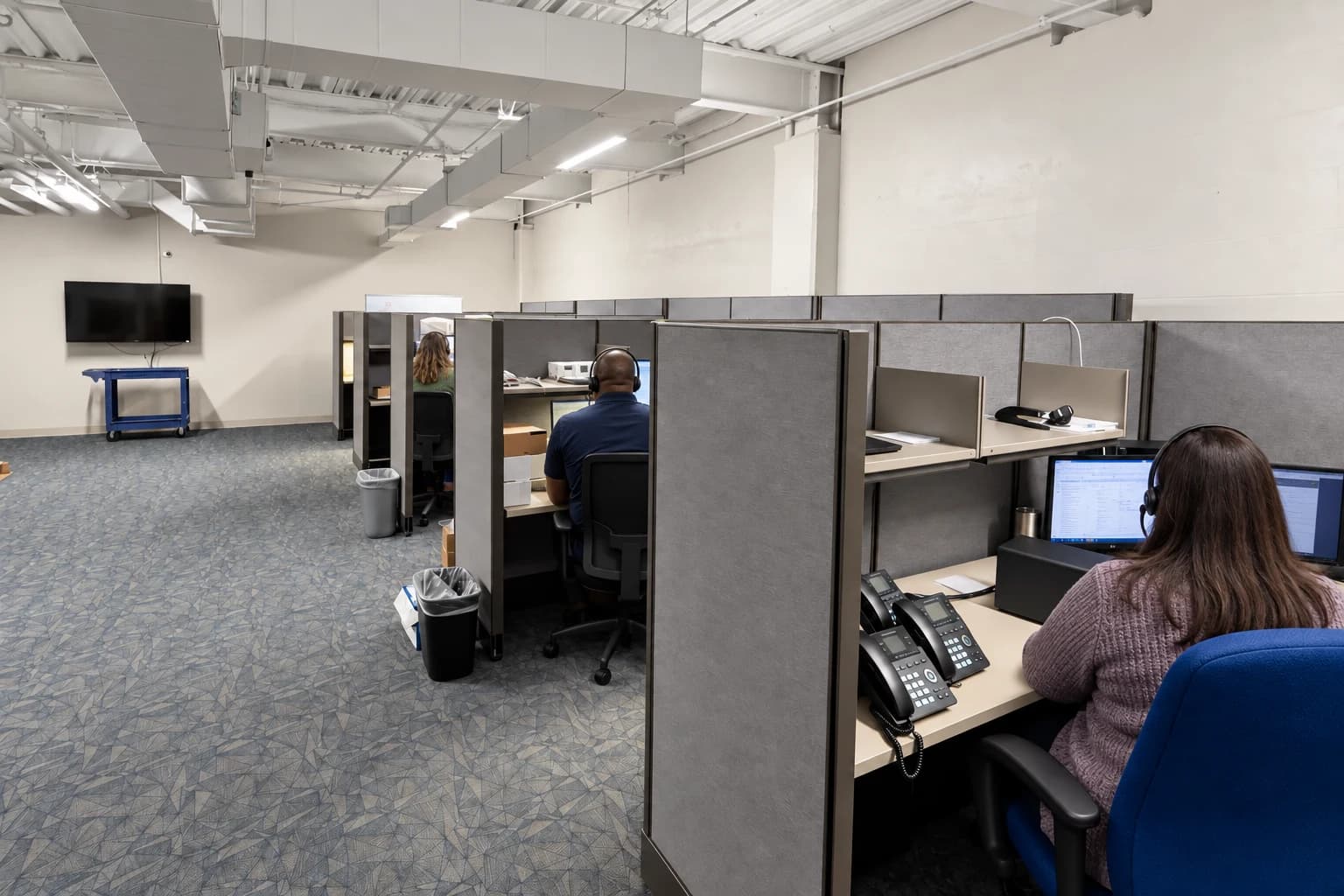
Inside our Macon support workspace.
Our Macon workspace brings desk phones, networked workstations, and customer support together.
4875 Riverside DriveMacon, GA 31210
Plan the deliverables
Make ongoing ownership clear
The final deliverables are agreed for your project. These are useful starting points.
- Support scope and contact path
- Request and escalation workflow
- Documentation and recurring-issue review
Questions to work through
Can support work alongside our internal IT team?
Yes. Define which tasks the internal team retains and which requests are routed to Progressive or a vendor.
How are project changes handled?
Separate routine support from changes that require planning, additional approval, or a distinct project scope.