
Managed services & support
Network Operations Center
Give distributed environments continuous visibility, proactive triage, escalation, documentation, and operational follow-through.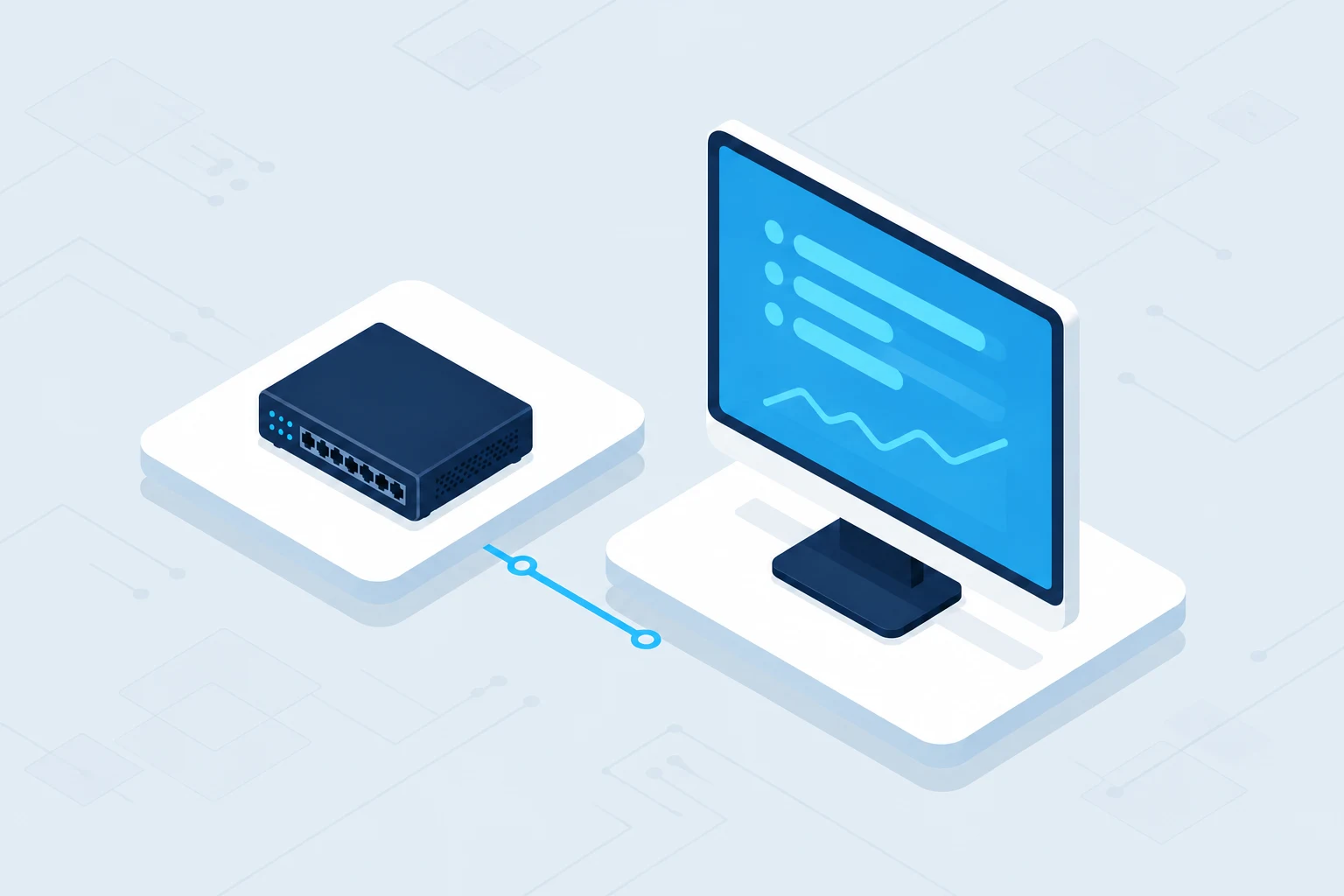
 People, systems, and ownership
Give each alert a clear next step.
Network operations connects visibility to action. The useful part is knowing what the signal means, who is responsible, and how the issue moves toward resolution.
How the service comes together
Observe
Define the supported devices, sites, monitoring signals, and contacts needed to understand the environment.
Triage and route
Review the alert, identify business impact, and direct the issue to the right technical or customer owner.
Follow through
Keep investigation notes, changes, vendor updates, and closure information connected to the original issue.
Infrastructure in focus
Keep the underlying network in view.
Switches and their connections are part of the infrastructure that network operations teams monitor and support.

Plan the deliverables
Make ongoing ownership clear
The final deliverables are agreed for your project. These are useful starting points.
- Defined monitoring scope
- Escalation and communication runbook
- Issue history and review process
Questions to work through
Does every alert require the same response?
No. Routing should reflect the affected system, business impact, agreed priorities, and available authority.
Are coverage hours and response times fixed?
They are defined in the service agreement for the supported environment. This page does not establish a service-level commitment.