
Network verification & implementation
Network Testing & Follow-Up
Validate performance, identify gaps, document results, and keep the finished environment aligned with the intended design.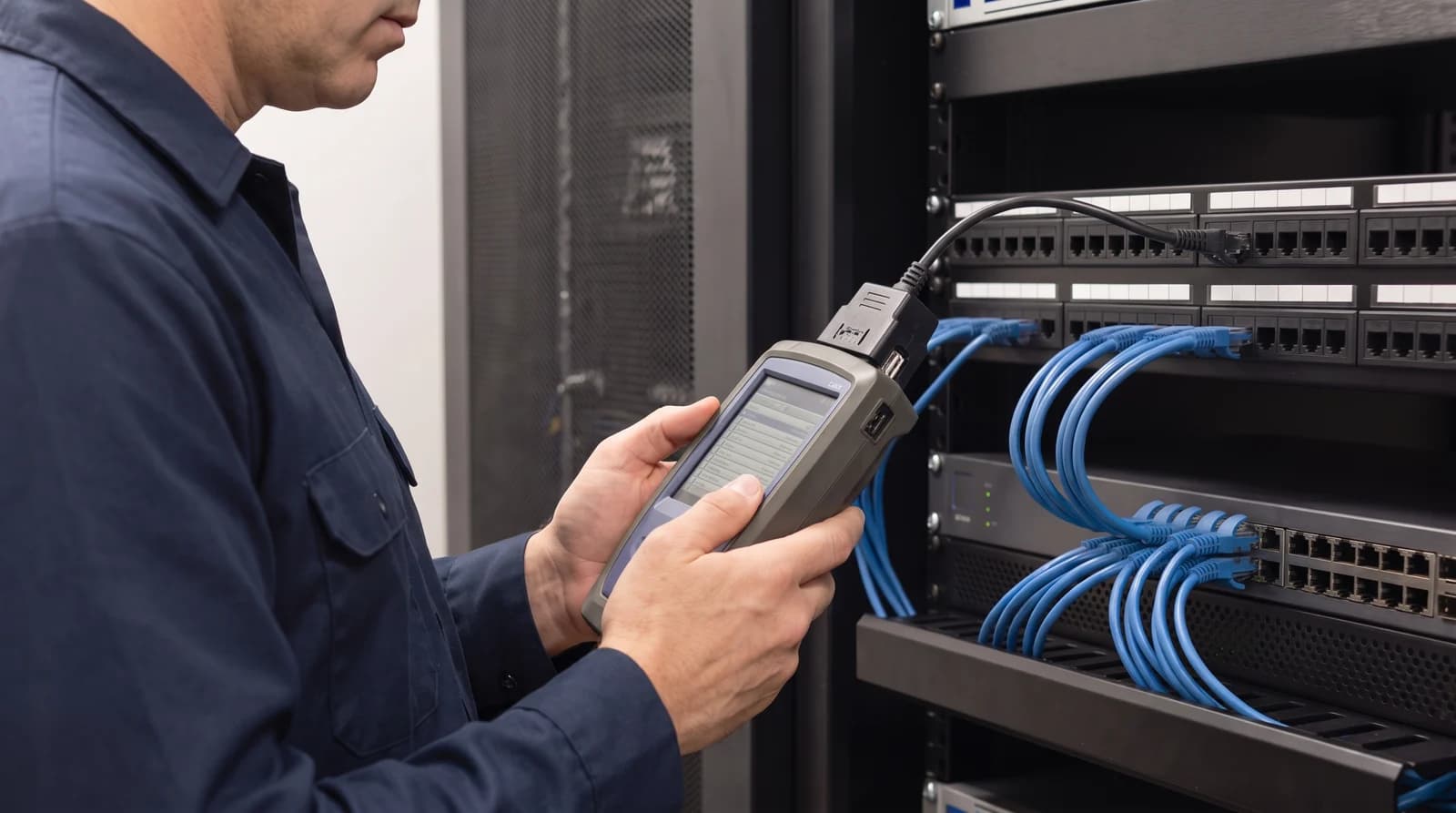
 From plan to handoff
Make the test result useful to the next person.
Good testing connects each result to the cable, device, location, and requirement being checked. That makes a failed result actionable and a finished record easier to use.
Follow the work
Define what will be tested
Distinguish copper-cabling tests, fiber tests, and active-network checks. Agree on the method, equipment, test limits, and records for each.
Trace and resolve exceptions
Use consistent connection identifiers. Record failed or incomplete tests, investigate the cause, and preserve the retest result.
Hand over usable evidence
Organize results with labels, drawings, issue status, and the name of the person accepting the work.
Plan the deliverables
A handoff the next team can use
The final deliverables are agreed for your project. These are useful starting points.
- Results tied to individual connections
- Exception and retest history
- Organized acceptance records
Questions to work through
Is a cable test the same as an application test?
No. They examine different parts of the environment. The test plan should distinguish the physical connection from the network and application behavior that depends on it.
Can testing support troubleshooting?
A targeted investigation can help narrow a reported problem. Start with the affected locations, symptoms, timing, and recent changes so the test has a clear purpose.